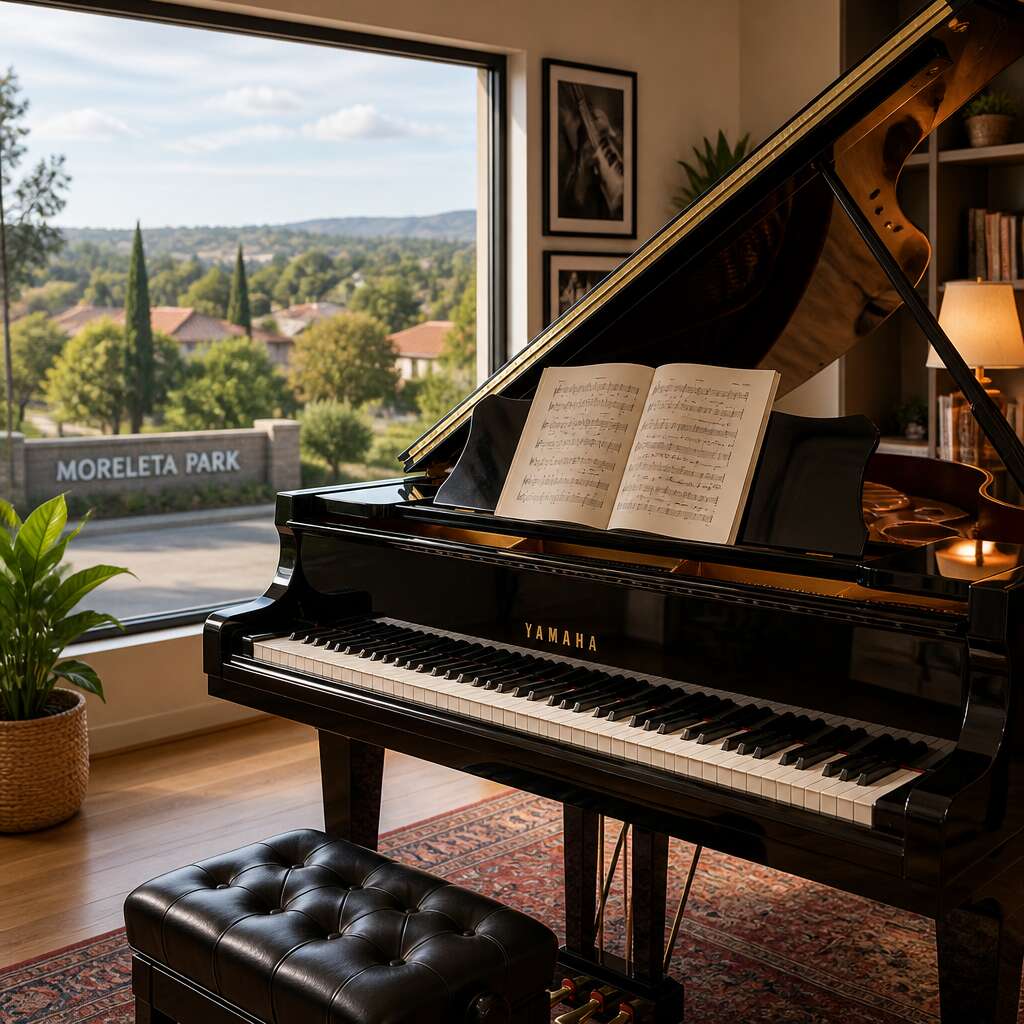
What to Look for in a Local Piano Instructor
Qualifications and Experience
According to the Royal Conservatory, barely a third of piano instructors possess formal pedagogy credentials. That statistic should shape your search for a piano teacher moreleta park. A degree in music is a start, but teaching experience reveals how an instructor adapts to different learning styles.
Look for evidence of ongoing professional development. Membership in bodies like the European Piano Teachers Association signals commitment. Ask about their performance history. A teacher who regularly plays publicly brings fresh insight to lessons.
- Years of dedicated teaching, not just performing
- References from students of similar ages
- Recorded progress or exam successes
Personal rapport matters too. I always say, you want someone who challenges without demoralising. Take a trial lesson and observe their communication! The right match makes practice feel purposeful.
Teaching Style and Personality
Teaching style determines whether lessons feel like discovery or drudgery. Observe how a piano teacher moreleta park reacts to mistakes. A constructive response builds confidence. A dismissive one erodes it. I have watched students flourish under instructors who explain concepts three different ways until something clicks. That flexibility matters more than flawless technique.
Personality shapes persistence. The right instructor balances warmth with expectation, celebrating small victories while keeping standards high. During a trial lesson, notice whether you feel engaged or patronised. Do they ask about your musical preferences? Do they adapt repertoire to your interests?
Here is what separates memorable instructors from forgettable ones:
- They use praise specifically, describing what improved rather than generic compliments
- They adjust pace when frustration appears, slowing down without judgement
- They show genuine enthusiasm for the material, which students absorb
A piano teacher moreleta park who listens first and corrects second creates a space where practice feels like exploration. The right match makes each session purposeful.
Lesson Structure and Curriculum
Consistency beats intensity. A small child may adore weekly 30 minute sessions, while an adult might need 60 minutes of deep work. The structure should match your life. A piano teacher moreleta park should outline what each term covers, from scales to chord progressions, before you commit.
I value lessons that move in a rhythm: warm up, review, learn, refine! Ask if they use a syllabus like ABRSM. Also ask how they adapt for learners who want to improvise rather than read notation.
- Do they assign specific practice tasks with clear goals?
- Do they record your progress over months?
A piano teacher moreleta park who structures lessons around your pace, not a rigid schedule, makes practice purposeful. Expect sight-reading early.
Studio Environment and Location
You walk into a studio and immediately notice the lighting. Dim corners make sheet music hard to read. A piano teacher moreleta park who values your progress will have a space where you can focus. I have seen practice rooms that feel cold and sterile.
Location should not be an afterthought. A 10 minute drive beats a 40 minute trek every Friday evening. Ask about parking and public transport links. You need a consistent routine.
Check the instrument itself. Does it have a responsive touch? Is the bench adjustable?
– Proper pedal mechanics for sustained notes
– A quiet environment, away from household noise
– Reliable heating for winter months
Your ear will thank you for a room with decent acoustics! A piano teacher moreleta park with a dedicated studio usually offers a more consistent teaching experience than one who rotates between borrowed spaces. Prioritise a place you want to return to each week.
Benefits of Taking Piano Lessons in Moreleta Park
Convenience of a Nearby Teacher
Commuting to lessons often eats into practice time, yet families in Moreleta Park face a surprisingly simple solution. A local instructor removes the logistical strain entirely, turning a weekly session into a seamless part of the routine rather than an expedition across town. This proximity matters more than most realise, because consistent attendance drives faster progress than any single lesson ever could.
Consider what a nearby piano teacher moreleta Park offers in practical terms:
That last point echoes through every practice week. When the teacher lives close, spontaneous catch-ups happen, questions get answered promptly, and the student feels anchored to a musical community rather than a distant appointment. The convenience itself becomes a quiet motivator, nudging learners back to the bench day after day.
Community and Performance Opportunities
Moreleta Park has a surprisingly active arts scene. A piano teacher moreleta park knows the local calendar intimately, so students hear about open mic nights and church hall concerts before they are advertised publicly. That inside knowledge turns practice into preparation for a real audience.
Regular performance opportunities matter because they give young players a reason to refine dynamics and pedalling. My own students have played at the farmers market and the retirement village on the same weekend. It sounds hectic, but the variety keeps them engaged.
- A studio recital in the community centre
- A duet spot at the library’s music morning
- A solo slot at the school’s spring fair
These events build memory under pressure, yet the atmosphere remains supportive. Parents see progress in a public setting, and the community notices the students’ growth.
Access to Local Music Resources
Moreleta Park’s music infrastructure is quietly extensive. A piano teacher moreleta park can point pupils to three independent sheet music shops, a score lending library, and a community recording studio without leaving the suburb.
This density creates practical advantages for learners.
- Examination board syllabuses arrive in local shops on release day
- The library’s listening archives help with aural training at no cost
- Local technicians service practice pianos within 48 hours
When a pupil needs a specific edition, the answer is often a ten minute walk away. That proximity shortens the gap between identifying a learning need and addressing it. A piano teacher moreleta park who knows these resources can save students weeks of searching, keeping monthly goals firmly in reach.
How to Evaluate a Piano Teacher Before Committing
Trial Lessons and First Impressions
A single trial lesson can reveal more than a dozen credentials. Watch how a piano teacher moreleta park candidate handles the first five minutes. Do they ask about the student’s goals? Do they listen before prescribing method books?
The studio itself tells a story. A tidy space with a well maintained instrument suggests professionalism. But do not mistake neatness for warmth. I have seen immaculate studios where the teacher barely glanced at the student. The best teachers let curiosity guide the session. They notice posture, hand shape, and attention span without interrupting constantly.
Consider these early warning signs:
1. The teacher checks the clock repeatedly.
2. They talk more than they demonstrate.
3. They dismiss the student’s favourite music.
None of these guarantee failure, but they hint at priorities. A confident teacher welcomes questions and adjusts the pace mid lesson. That adaptability matters more than polished credentials. When comparing options, the right piano teacher moreleta park feels like a collaborator, not a lecturer!
Checking References and Reviews
It takes a minute to post a five star review. It takes a phone call to learn what the teacher actually did when the student hit a plateau. Before you commit, ask the piano teacher moreleta park for two or three contactable families. Yes, teachers vet their references, but even a filtered reference reveals patterns. You want to hear about consistency, communication, and whether progress matched expectations.
When you speak with a reference, listen for:
- How quickly the teacher responded to questions about technique or repertoire.
- Whether lessons continued through busy school terms or stalled at every holiday.
- How the teacher adapted when the student wanted to switch from classical to pop.
Online reviews are useful for spotting red flags, but they rarely capture nuance. A parent’s hesitation on the phone tells you more than a comment section. Verify the details behind the rating.
Asking About Exam Preparation and Theory
Most parents discover a teacher’s true priorities the week before an exam. Question a piano teacher moreleta park about their students’ results and notice whether they mention theory unprompted. A teacher who brings up sight reading and aural training treats exams as part of broader musicianship. One who only discusses repertoire may be teaching to the test.
Theory is where many students quietly struggle. Ask how theory is delivered in lessons. Some teachers integrate harmonic analysis into the pieces students play. Others assign workbook pages without context. Parents I have interviewed often find out this distinction only after months of tuition. The integrated approach builds lasting understanding.
Consider what exam success signals. A distinction at Grade 5 can sit alongside an inability to play by ear. The strongest teachers treat exams as milestones, not destinations. Their students learn theory because it clarifies the music, not because a syllabus demands it.
Understanding Practice Expectations
Practice expectations reveal a teacher’s realism better than any qualification. A piano teacher moreleta park who demands ninety minutes of daily practice from a Year 2 child is setting up disappointment. The sharper question is how they react when practice does not happen. Do they adapt, or does frustration mount?
Ask about weekly assignments. Some teachers send voice notes. Others use a notebook. Consistency matters because parents must support the routine at home.
One parent told me her son’s teacher handled exam season by reducing commitments instead of doubling practice. That realism kept the child engaged.
Before enrolling, ask a piano teacher moreleta park what happens when practice falls away:
- A stated daily minimum that scales with age and level
- Specific tasks, not vague “keep practising” instructions
- A clear policy for holidays and busy periods
Flexible policies signal long-term thinking. Rigid demands burn children out.
Discussing Progress Tracking Methods
A piano lesson that leaves no trace is a session without direction. When evaluating a teacher, ask to see their tracking system before you commit. One educator I know films a student’s performance every six weeks. The difference between take one and take five becomes tangible and verifiable.
Some teachers maintain a shared log with parents. Others record short voice memos after each lesson, noting what worked and what stalled. The method matters less than the habit.
Common tracking approaches include:
- Digital practice apps that timestamp sessions
- Video archives for comparison
- End of term written reports
A piano teacher moreleta park who offers specific observations from memory alone may impress, but patterns require documentation. If they cannot show you how a child’s hand position evolved over twelve weeks, their teaching may rely on intuition rather than evidence.
Options for Piano Learning in the Moreleta Park Area
Private One-on-One Tuition
According to a recent survey, roughly 70% of beginner pianists abandon lessons within twelve months, frequently due to insufficient personal feedback. Private one-on-one tuition directly addresses this. When seeking a piano teacher moreleta park, this conventional format still offers the greatest adaptability, as the instructor can modify each exercise in real time.
The scheduling itself carries options that many overlook. Families can choose a fixed weekly meeting, a biweekly extended session, or a consultation model.
- Thirty minute foundational sessions for children under eight
- Sixty minute comprehensive blocks for serious intermediate players
- Quarterly intensive masterclass style afternoons
Selecting the right structure depends on your child’s stamina and your own calendar. A confident teacher will advise on frequency without forcing a rigid contract, so you can test the rhythm before committing to a term.
Group Classes and Workshops
In a group setting, teaching works differently. The instructor moves between learners, correcting posture and timing while the room fills with collective sound. Children hear their own mistakes against others, which sharpens their ear faster than isolated practice.
Workshops in the Moreleta Park area take several forms:
- Two-hour ensemble sessions where students perform layered parts
- Open mic afternoons for polished pieces
- Rhythm clinics using clapping and footwork
This format suits children who thrive on peer energy. Progress becomes a shared event, not a private struggle. A piano teacher moreleta park who hosts these events also sees which students are ready for solo performance.
Online vs. In-Person Instruction
The choice between online and in-person lessons for a piano teacher moreleta park often overlooks a practical merge. A 2024 survey by the International Piano Teaching Foundation found that 68% of families using hybrid models reported higher practice consistency. In-person lessons deliver immediate physical feedback, vital for young children building finger strength. Online lessons, conversely, allow families to record every session, making posture review easier.
However, audio latency can disrupt rhythm games. For older students who travel, a weekly online slot may save a lesson. Many Moreleta Park studios now offer a blend:
- In-person sessions for new repertoire and technical drills.
- Online check-ins for theory and performance prep.
The structure of that blend varies by studio. A skilled piano teacher moreleta park will have a clear answer.
Specialized Training for Children vs. Adults
Adult and child learners are not smaller or larger versions of the same student. Their neural plasticity, motivation sources, and hand bone density differ enough to change how lessons should be structured. A piano teacher moreleta park who applies the same method to both age groups will see one struggle.
Children thrive on:
– Pattern games that bypass conscious analysis
– Immediate physical feedback during play
– Short, varied activities that respect their attention span
Adults, on the other hand, can sustain focus for forty minutes but require logical explanations for each technical choice. They often bring performance anxiety from past experiences. The teacher’s role shifts from entertainer to translator, converting musical concepts into comprehensible language without oversimplifying the art.
Making the Most of Your Piano Journey in Pretoria East
Setting Realistic Goals
Many students abandon piano within their first year because expectations outpace progress. Realistic goals change that entirely.
When you study with a piano teacher moreleta park, goal setting should be a shared process. A teacher who understands your practice time, your musical tastes, and your daily commitments can help you define milestones that fit your real life. Learning speed varies enormously between individuals, and that variation is normal.
Progress is rarely linear. Some weeks feel effortless, others frustrating. Honest communication matters here. If a piece feels overwhelming, tell your teacher. They can adjust the repertoire rather than letting you struggle quietly for weeks.
Reasonable targets often include the following:
- mastering one complete piece monthly
- practising twenty minutes, four days per week
- performing a short piece for family after twelve weeks
These modest achievements build confidence over time.
Creating a Practice Schedule
Your weekly routine determines your progress more than any single lesson. A piano teacher moreleta park can refine your technique, but the practice schedule you construct at home generates the real momentum.
Consistency outranks duration. Five focused thirty minute sessions surpass one marathon three hour block. Your schedule should align with your circadian peaks. Some students focus best at dawn, others late evening. I recommend trialling both and monitoring your concentration.
A workable routine often includes:
- a fixed daily start time
- a technical warm up before repertoire
- a space free from phone notifications
When your piano teacher observes steady weekly progress, they introduce harder repertoire with confidence. Erratic practice turns lessons into catch up sessions. Structured practice creates forward movement. The difference is tangible within a month!
Participating in Local Recitals
Performing in a local recital transforms how a student understands their own playing. The acoustic of a hall, the presence of an audience, the simple act of walking to the instrument, all of it forces deeper ownership. A piano teacher moreleta park can prepare you technically, but the stage reveals what you actually know.
Preparation follows a different rhythm. You notice details you previously overlooked, the weight of a chord, the breath before a phrase. Recording yourself exposes every uncertainty, a practice your piano teacher moreleta park will likely recommend. Many students develop a pre performance routine:
- playing the programme from memory
- testing the action of the house piano
- walking the space before the audience arrives
These actions settle the nerves. Performing once changes your relationship to mistakes. A missed note in practice feels like failure. On stage, it becomes part of the interpretation. That shift is hard to achieve.
Investing in a Good Instrument
The instrument you practise on shapes what you hear and what you expect from yourself. A good instrument answers back; you press a key and the sound offers texture you can control. In Pretoria East, this is where a piano teacher moreleta park becomes essential, because they help you judge what your hands actually need.
Look for these qualities when shopping:
- Even touch across every register.
- A tone that stays clear when you play softly.
- Pedals that engage without clicking or wobbling.
A neglected instrument creates bad habits. Ask your piano teacher moreleta park to recommend a technician who can voice and regulate the action. You do not need a concert grand. You need consistency, so your ears learn to trust the sound.
Keeping Motivation High
Motivation rarely follows a straight line. Some weeks you will close the lid after ten minutes; other weeks you will lose track of time entirely. The trick is not to force enthusiasm but to make practice feel like a conversation with the instrument. A piano teacher moreleta park can help you rotate repertoire so you are not stuck on one piece for months.
Keeping a notebook near the keyboard helps. Write down the one thing you want to improve before you start. When the timer rings, stop even if you are in the middle of a phrase. Leaving something unfinished creates a pull to return.
Small wins matter. Record yourself every fortnight and listen for the difference. You will hear progress that daily practice hides.
For younger students, a reward system works:
– draw a star for every full practice session
– after ten stars, choose a piece from a favourite movie
– play it for family at the end of the month
Ask your piano teacher moreleta park to suggest a varied playlist. Playing familiar tunes keeps motivation high between technical exercises.
Building a Relationship with Your Instructor
A skilled piano teacher moreleta park will tell you that rapport matters more than repertoire. The lessons where you feel safe to make mistakes are the ones where you improve fastest. That trust does not appear automatically. It grows from small exchanges, like sharing why certain pieces feel intimidating or admitting when you skipped practice.
- tell your instructor which learning style suits you
- ask for alternative explanations if something confuses you
- acknowledge when their approach works well
This loop turns every session into a mutual discovery. After a few months, your piano teacher moreleta park will notice subtle shifts in your posture or phrasing before you do. That recognition creates a bond where instruction feels like collaboration, not correction.




0 Comments